

Will AI Replace Traditional Homework and Assignments?
Education has entered a period of extraordinary transformation. From digital classrooms and virtual learning environments to personalized educational platforms, technology continues to reshape how students learn and how teachers deliver instruction. Among the most influential developments in recent years is the rapid advancement of artificial intelligence. AI is no longer limited to research laboratories or technology companies. It has become a visible part of daily life, influencing communication, business, healthcare, entertainment, and increasingly, education.
As AI-powered tools become more sophisticated, a new question is capturing the attention of educators, students, parents, and policymakers: Will AI replace traditional homework and assignments? The discussion is becoming more relevant as artificial intelligence gains the ability to generate content, explain concepts, solve problems, analyze information, and support personalized learning experiences.
Some view AI as a breakthrough that can improve educational outcomes and reduce unnecessary academic burdens. Others express concern that overreliance on technology could weaken critical thinking, creativity, and independent learning. The reality is likely more complex than either extreme. Rather than completely eliminating traditional homework, AI may fundamentally change its purpose, structure, and role within modern education.
Understanding how artificial intelligence is influencing student assignments provides valuable insight into the future of learning and the evolving relationship between technology and education.
The Traditional Role of Homework in Education
For decades, homework has served as an important extension of classroom learning. Teachers assign tasks to reinforce concepts, encourage practice, assess understanding, and promote independent study habits. Homework has traditionally been viewed as a way for students to strengthen knowledge outside school hours while developing responsibility and discipline.
Assignments often require students to apply classroom concepts, complete research, solve mathematical problems, write essays, analyze information, and demonstrate comprehension. These activities are designed to help learners retain knowledge and improve academic performance.
However, traditional homework has also faced criticism. Many students view repetitive assignments as time-consuming and disconnected from real-world applications. Parents and educators have debated whether excessive homework contributes to stress, fatigue, and reduced motivation.
As educational needs continue evolving, schools are increasingly reconsidering the effectiveness of conventional assignment models. The emergence of artificial intelligence is accelerating these conversations.
How AI Is Transforming Student Learning
Artificial intelligence has introduced new possibilities for personalized education. Unlike traditional learning resources, AI-powered tools can adapt to individual learning styles, identify knowledge gaps, and provide customized support.
Students can now access intelligent tutoring systems that explain concepts, answer questions, generate practice exercises, and offer immediate feedback. These capabilities make learning more interactive and responsive than traditional educational methods.
AI learning tools are particularly effective at helping students understand complex subjects. Instead of waiting for classroom instruction or scheduled tutoring sessions, learners can receive assistance whenever needed.
This accessibility has transformed expectations around education. Students increasingly expect personalized guidance, instant feedback, and flexible learning experiences. As a result, the role of homework is beginning to shift from simple repetition toward deeper engagement and skill development.
Why Traditional Assignments Are Facing Challenges
One reason traditional homework is being questioned is that many assignments were designed for an educational environment that existed before advanced digital technologies. Tasks focused heavily on memorization, information retrieval, and procedural repetition.
Today, information is available instantly through search engines, educational platforms, and AI-powered systems. Activities that primarily test a student’s ability to locate facts may no longer provide the same educational value they once did.
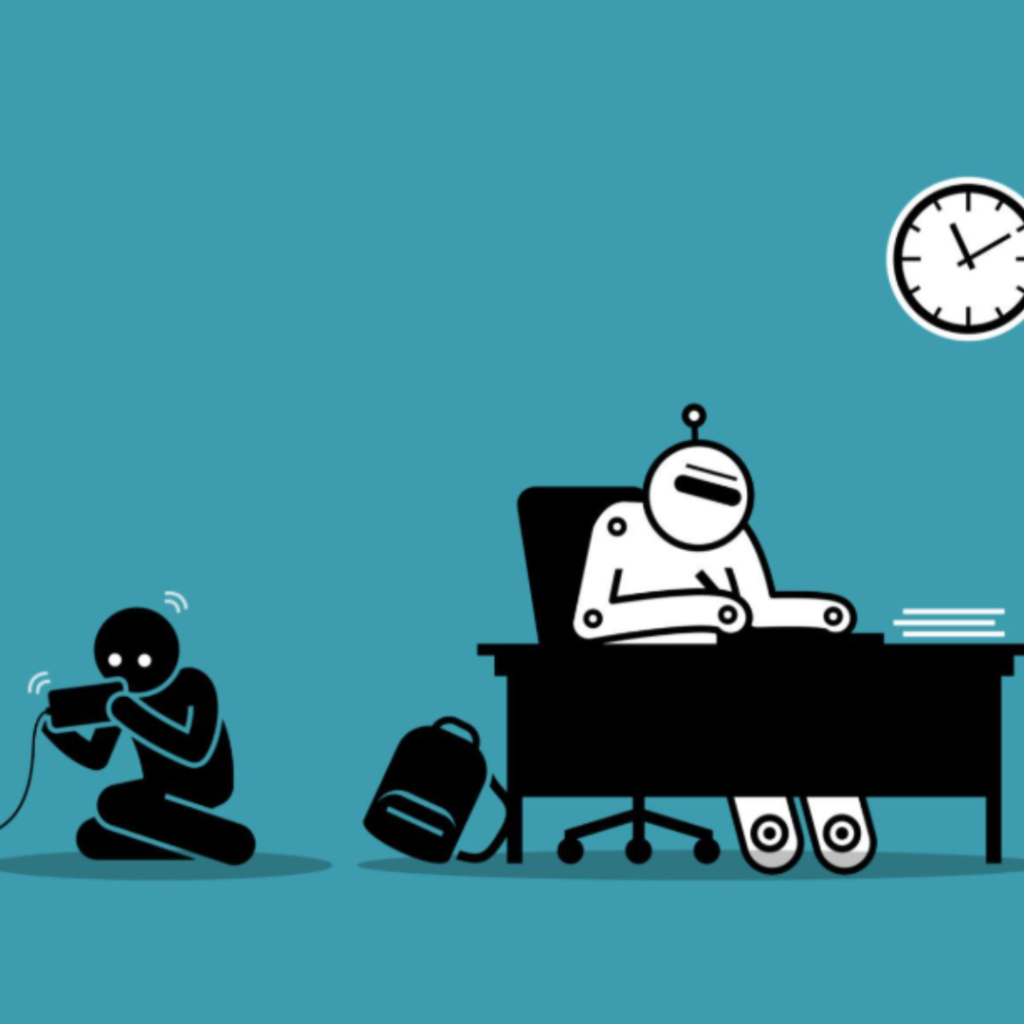
Artificial intelligence can generate summaries, draft essays, solve equations, and answer factual questions within seconds. This capability challenges educators to rethink assignment design and learning objectives.
If AI can complete certain tasks efficiently, schools may need to focus less on routine assignments and more on activities that require critical thinking, originality, collaboration, and real-world problem-solving.
AI as a Learning Partner Rather Than a Replacement
Many experts believe artificial intelligence is more likely to become a learning partner than a replacement for homework. AI tools can support students throughout the learning process without eliminating the need for meaningful educational activities.
For example, a student writing an essay may use AI to brainstorm ideas, improve structure, or clarify difficult concepts. However, the learner still needs to evaluate information, develop arguments, and express original perspectives.
Similarly, AI can assist with mathematical calculations or scientific explanations, but students must understand underlying principles and apply knowledge effectively.
In this model, artificial intelligence functions as a supportive educational resource rather than a substitute for learning itself. The focus shifts from completing assignments to enhancing understanding and improving learning outcomes.
Personalized Homework Could Become the New Standard
One of the most promising applications of AI in education involves personalized homework. Traditional assignments often provide identical tasks for entire classrooms despite significant differences in student abilities, interests, and learning needs.
Artificial intelligence can create customized learning experiences tailored to individual learners. Students who struggle with certain topics can receive additional practice, while advanced learners can explore more challenging material.
Personalized assignments improve engagement because they align more closely with each student’s current skill level. Instead of feeling overwhelmed or underchallenged, learners receive tasks that support meaningful growth.
This adaptive approach has the potential to make homework more effective and relevant while reducing frustration and disengagement.
The Impact on Student Creativity and Critical Thinking
A common concern surrounding AI in education involves the potential impact on creativity and critical thinking. If students rely excessively on artificial intelligence to generate answers, they may miss opportunities to develop important cognitive skills.
Critical thinking requires learners to analyze information, evaluate evidence, solve complex problems, and make informed decisions. Creativity involves generating original ideas, exploring possibilities, and approaching challenges from unique perspectives.
These abilities remain difficult for AI to replicate fully because they depend on human judgment, experience, and imagination. Educational systems must therefore ensure that assignments continue encouraging active participation rather than passive reliance on technology.
The challenge is not preventing students from using AI but teaching them how to use it responsibly and effectively. When integrated thoughtfully, AI can actually support creative exploration and deeper intellectual engagement.
Teachers Will Need to Redesign Assignments
As artificial intelligence becomes more widespread, educators will likely redesign assignments to emphasize skills that technology cannot easily replicate. Traditional homework focused on information recall may gradually give way to more dynamic learning experiences.
Future assignments may involve project-based learning, real-world problem-solving, collaborative activities, presentations, research analysis, and creative production. These tasks encourage students to apply knowledge rather than simply reproduce information.
Teachers may also incorporate reflective exercises that require students to explain reasoning, evaluate sources, and demonstrate understanding through authentic engagement.
This evolution could strengthen educational outcomes by encouraging learners to develop practical skills that remain valuable in both academic and professional settings
AI Is Changing Student Assessment Methods
The rise of artificial intelligence is influencing not only homework but also broader assessment strategies. Schools and universities are exploring alternative methods for evaluating student performance.
Traditional assignments often measure outputs rather than learning processes. AI technologies encourage educators to focus more on how students think, solve problems, and apply knowledge.
Assessments may increasingly include portfolios, interactive projects, presentations, simulations, and experiential learning activities. These approaches provide richer insights into student capabilities while reducing dependence on conventional homework models.
The shift toward authentic assessment reflects a growing recognition that education should prepare students for real-world challenges rather than simply measure memorization.
The Benefits and Concerns of AI-Powered Education
The integration of AI into education offers numerous advantages. Personalized learning, immediate feedback, accessibility, efficiency, and adaptive instruction can enhance educational experiences for many students.
AI tools can help learners overcome obstacles, strengthen understanding, and access support whenever needed. These capabilities contribute to more inclusive and responsive learning environments.
At the same time, legitimate concerns remain. Issues involving academic integrity, overdependence on technology, privacy, data security, and unequal access require careful consideration.
Educational institutions must establish clear guidelines and ethical frameworks to ensure artificial intelligence supports learning without compromising educational quality.
Balancing innovation with responsibility will be essential as AI becomes more deeply integrated into academic environments.
What the Future Classroom Might Look Like
The future classroom will likely blend human instruction with intelligent technology. Teachers will continue serving as mentors, facilitators, and guides, while AI provides personalized support and administrative assistance.
Homework may become more interactive, adaptive, and skill-focused. Students could engage with customized learning pathways, collaborative projects, virtual simulations, and real-world challenges that encourage deeper understanding.
Artificial intelligence may handle routine tasks such as grading, content recommendations, and progress tracking, allowing educators to focus more on meaningful interactions and student development.
Rather than replacing education, AI has the potential to enhance learning experiences and create more effective educational systems.
Conclusion
Will AI replace traditional homework and assignments? The most likely answer is no—but it will transform them significantly. Artificial intelligence is reshaping how students learn, how teachers assess progress, and how educational experiences are designed.
Traditional homework based primarily on repetition and information retrieval may become less relevant as AI tools continue advancing. However, meaningful assignments that encourage creativity, critical thinking, collaboration, and problem-solving will remain essential.
The future of education lies not in choosing between artificial intelligence and traditional learning but in combining the strengths of both. AI can provide personalized support, instant feedback, and adaptive learning opportunities, while educators continue fostering human skills that technology cannot replace.
As education evolves, homework will likely become more purposeful, engaging, and connected to real-world applications. In this new landscape, artificial intelligence will serve not as a replacement for learning but as a powerful tool that helps students learn more effectively and prepare for an increasingly digital future.
You May Also Read
Innovation in Curriculum Design: Transforming Education Through Future-Ready Learning 2026
Innovation in Curriculum Design Education has always evolved alongside society,…
Read More
Why Universities Revise Their Curriculum Every Few Years: The Importance of Modern Higher Education 2026
Why Universities Revise Their Curriculum Every Few Years Higher education…
Read MoreUniversities With AI Research Facilities: A Complete Guide to Artificial Intelligence Education and Innovation 2026
Universities With AI Research Facilities Artificial intelligence has become one…
Read More
Leave a Reply