Why Research Commercialization Matters: Transforming Ideas into Meaningful Innovation
Scientific research has always been one of the strongest drivers of human progress. Every major advancement in healthcare, engineering, agriculture, renewable energy, artificial intelligence, communication, manufacturing, and biotechnology has its roots in years of careful research and experimentation. However, research alone does not automatically improve lives. The true value of discovery emerges when knowledge moves beyond laboratories and academic journals to become products, technologies, services, and practical solutions that benefit society. This is precisely Why Research Commercialization Matters in today’s innovation-driven world.
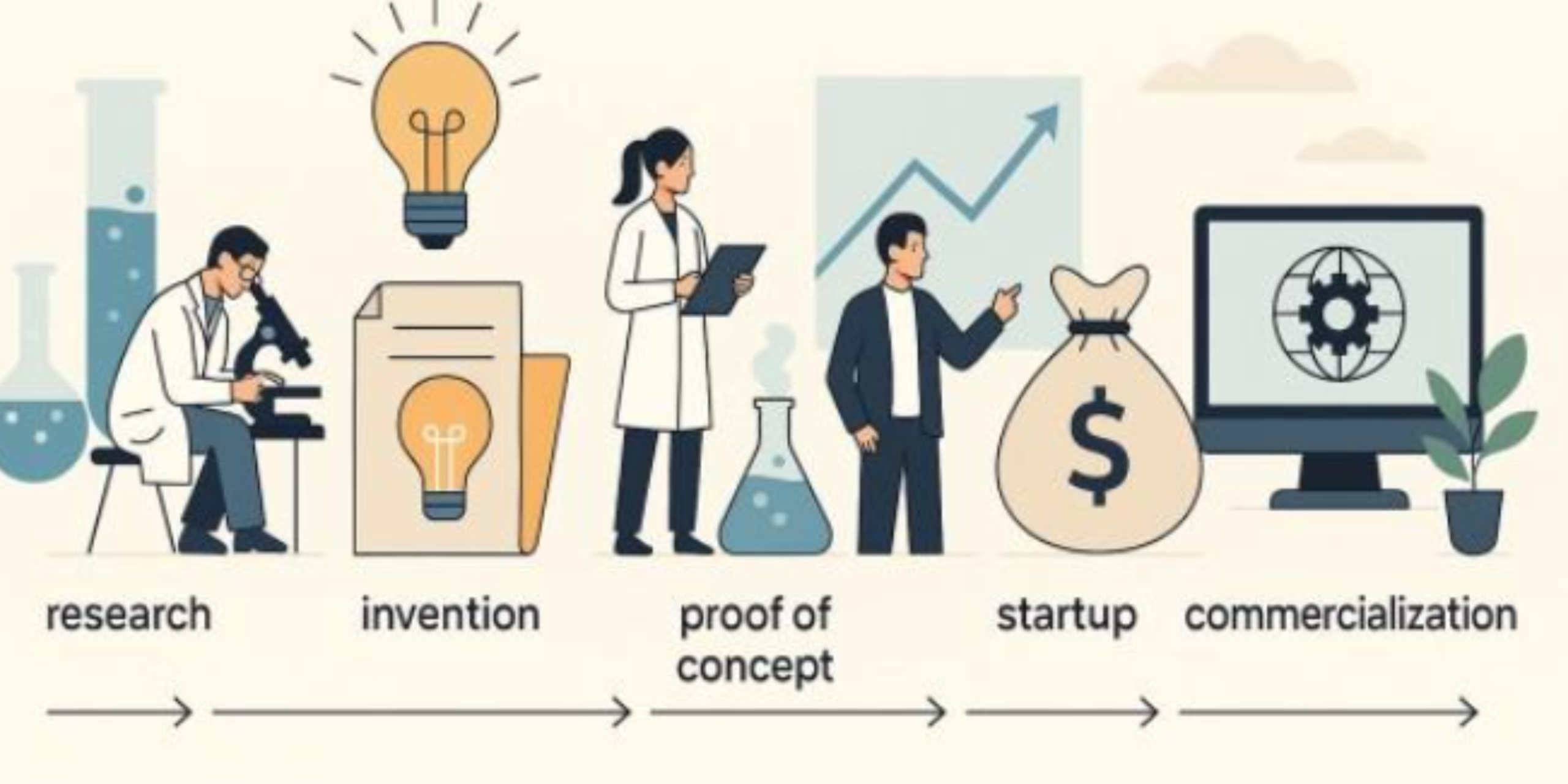
Research commercialization refers to the process of transforming scientific discoveries, technological breakthroughs, and academic research into commercially viable products, services, or business solutions. Rather than allowing valuable innovations to remain confined within research institutions, commercialization creates pathways that connect researchers, universities, entrepreneurs, investors, industries, and governments. These collaborations help convert promising ideas into practical applications capable of solving real-world challenges while generating economic growth and creating employment opportunities.
As global competition increasingly revolves around innovation, countries investing in effective commercialization strategies often achieve stronger economic performance, faster technological advancement, and greater international competitiveness. Understanding Why Research Commercialization Matters helps researchers, students, entrepreneurs, policymakers, and businesses recognize that innovation reaches its full potential only when it successfully addresses practical needs within society.
Understanding Research Commercialization
Before exploring Why Research Commercialization Matters, it is important to understand what commercialization actually involves. Research commercialization is not simply about selling scientific discoveries. Instead, it represents a structured process that transforms academic knowledge into practical solutions with measurable value.
This process may include patent protection, technology transfer, product development, prototype creation, industry partnerships, licensing agreements, startup formation, regulatory approvals, manufacturing, and market introduction.
Successful commercialization connects scientific excellence with public benefit.
Innovation becomes meaningful through practical application.
Bridging the Gap Between Research and Society
Universities and research institutions continuously generate remarkable discoveries, yet many valuable innovations never reach the people who could benefit from them. Without commercialization, promising technologies often remain within laboratories despite their enormous potential.
One of the strongest reasons Why Research Commercialization Matters is because it bridges the gap between academic research and real-world implementation. Scientific knowledge becomes accessible through products, healthcare solutions, industrial technologies, educational tools, environmental innovations, and digital services.
Knowledge achieves greater value when shared practically.
Research gains broader impact beyond publications.
Accelerating Innovation
Innovation rarely occurs through isolated research alone. Commercialization encourages collaboration among researchers, engineers, entrepreneurs, manufacturers, investors, designers, marketers, and policymakers.
These partnerships accelerate product development while improving technological refinement and market readiness. Rather than waiting many years for discoveries to reach society, commercialization shortens the journey from laboratory to marketplace.
Accelerated innovation supports faster solutions for emerging global challenges.
Collaboration strengthens creative progress.
Driving Economic Growth
Innovation represents one of the strongest foundations of modern economic development. Successful commercialization creates new industries, strengthens existing businesses, attracts investment, expands exports, and increases national competitiveness.
One important reason Why Research Commercialization Matters involves its contribution to sustainable economic growth. Commercialized research generates business opportunities capable of supporting long-term prosperity while encouraging further investment into scientific discovery.
Innovation fuels modern economies.
Knowledge becomes an economic resource.
Creating High-Quality Employment
Research commercialization generates employment across numerous professional disciplines. Scientists, engineers, product designers, software developers, regulatory specialists, manufacturing experts, marketing professionals, intellectual property attorneys, financial analysts, and entrepreneurs all contribute throughout commercialization processes.
Rather than creating only research positions, commercialization expands employment across entire innovation ecosystems.
Growing industries create opportunities for diverse professional backgrounds.
Innovation supports workforce development.
Encouraging University-Industry Collaboration
Modern universities increasingly collaborate with private companies to accelerate technological advancement. Businesses often possess manufacturing expertise, financial resources, market knowledge, and customer access, while universities contribute scientific discovery and technical expertise.
These partnerships improve commercialization success by combining complementary strengths.
Understanding Why Research Commercialization Matters includes recognizing the importance of productive collaboration between academia and industry.
Shared expertise creates stronger outcomes.
Partnerships encourage sustainable innovation.

Supporting Startup Development
Many successful startup companies originate from university laboratories or research institutions. Entrepreneurs identify promising discoveries, develop commercial strategies, secure investment, and introduce innovative solutions into competitive markets.
Commercialization transforms research into entrepreneurial opportunities capable of creating entirely new industries.
Startup ecosystems benefit significantly from strong research foundations.
Innovation encourages business creation.
Entrepreneurship accelerates technological adoption.
Intellectual Property Protects Innovation
Intellectual property plays a vital role throughout commercialization. Patents, copyrights, trademarks, and licensing agreements protect researchers while encouraging organizations to invest confidently in product development.
Effective intellectual property management ensures innovators receive appropriate recognition and financial returns for their discoveries.
Protection encourages continued investment in scientific research.
Innovation flourishes within secure legal frameworks.
Solving Real-World Problems
Research achieves its greatest significance when addressing practical challenges affecting communities, industries, healthcare systems, education, agriculture, transportation, energy production, and environmental sustainability.
Commercialization enables innovative solutions to reach individuals who genuinely need them. Medical devices improve patient care, renewable technologies reduce emissions, digital platforms strengthen communication, and agricultural innovations improve food security.
Practical impact explains Why Research Commercialization Matters globally.
Solutions improve everyday life.
Attracting Investment into Research
Investors increasingly recognize scientific innovation as an important source of future business growth. Commercialization demonstrates how research may generate practical applications, encouraging venture capital, government funding, corporate partnerships, and private investment.
Financial support enables researchers to continue exploring ambitious ideas while expanding commercialization activities.
Investment strengthens long-term innovation ecosystems.
Confidence grows through successful outcomes.
Improving Global Competitiveness
Countries successfully commercializing research often establish leadership within emerging industries such as artificial intelligence, biotechnology, advanced manufacturing, renewable energy, healthcare innovation, and digital technologies.
Strong commercialization strategies improve international competitiveness while attracting skilled professionals, multinational companies, and global partnerships.
Knowledge-based economies increasingly depend upon effective innovation systems.
Research strengthens national development.
Challenges Facing Research Commercialization
Although commercialization offers significant benefits, the journey from laboratory discovery to commercial success remains complex. Researchers may encounter funding limitations, regulatory requirements, technical challenges, market uncertainty, manufacturing difficulties, or intellectual property concerns.
Addressing these challenges requires coordinated support involving universities, governments, investors, legal experts, and industry partners.
Understanding obstacles improves commercialization planning.
Preparation reduces unnecessary delays.
The Role of Government Policies
Government policies significantly influence commercialization success by supporting research funding, startup incentives, tax benefits, technology transfer offices, innovation grants, incubators, accelerators, and public-private partnerships.
Supportive policies encourage researchers to pursue commercialization while reducing financial risk associated with technological innovation.
Public investment strengthens national research capacity.
Strategic planning encourages innovation.
Commercialization Benefits Students and Researchers
Students increasingly participate in commercialization through entrepreneurship programs, innovation competitions, research internships, startup incubators, and interdisciplinary projects.
These experiences develop practical skills including business planning, product development, intellectual property management, leadership, teamwork, communication, and innovation strategy.
Career opportunities expand considerably within commercialization ecosystems.
Education becomes increasingly experience-driven.
Sustainability and Research Commercialization
Commercialization also contributes positively toward sustainable development by accelerating environmentally responsible technologies. Innovations involving clean energy, water purification, waste reduction, sustainable agriculture, green manufacturing, and circular economy solutions often require commercialization before achieving widespread societal impact.
Transforming sustainable research into practical products supports environmental protection while encouraging economic growth.
Innovation supports responsible development.
Sustainability requires practical implementation.
The Future of Research Commercialization
Emerging technologies including artificial intelligence, quantum computing, biotechnology, advanced robotics, personalized medicine, space technology, and climate innovation will likely increase commercialization activity during coming decades.
Universities, governments, corporations, and entrepreneurs are expected to strengthen collaboration while creating more efficient innovation ecosystems.
Future economic success will depend increasingly upon transforming knowledge into meaningful societal value.
Commercialization will remain central to innovation.

Why Every Innovation Needs Commercialization
Scientific discovery alone rarely transforms industries or improves everyday life. Commercialization provides the essential pathway allowing research to become practical, accessible, affordable, and widely available.
Whether developing life-saving medicines, educational technologies, sustainable materials, digital platforms, healthcare equipment, or industrial solutions, commercialization ensures innovation reaches society effectively.
Understanding Why Research Commercialization Matters highlights the importance of completing the innovation journey rather than stopping at discovery.
Implementation creates lasting impact.
Conclusion
Why Research Commercialization Matters extends far beyond generating financial returns. It transforms scientific discoveries into meaningful solutions that improve healthcare, education, agriculture, manufacturing, communication, environmental sustainability, and economic development. By connecting researchers with entrepreneurs, industries, governments, and investors, commercialization ensures valuable knowledge benefits society rather than remaining confined within laboratories.
Whether exploring Research Commercialization, Technology Commercialization, Innovation Commercialization, Research to Market, Technology Transfer, or Commercial Research, successful commercialization strengthens innovation ecosystems while creating employment, attracting investment, encouraging entrepreneurship, and solving complex global challenges.
As the world increasingly depends upon scientific advancement to address future needs, research commercialization will continue playing an essential role in transforming knowledge into practical progress. Supporting effective commercialization not only benefits researchers and businesses but also creates stronger economies, healthier communities, sustainable industries, and a future where innovation consistently improves the quality of life for people around the globe.
Leave a Reply